Ushabti
Description
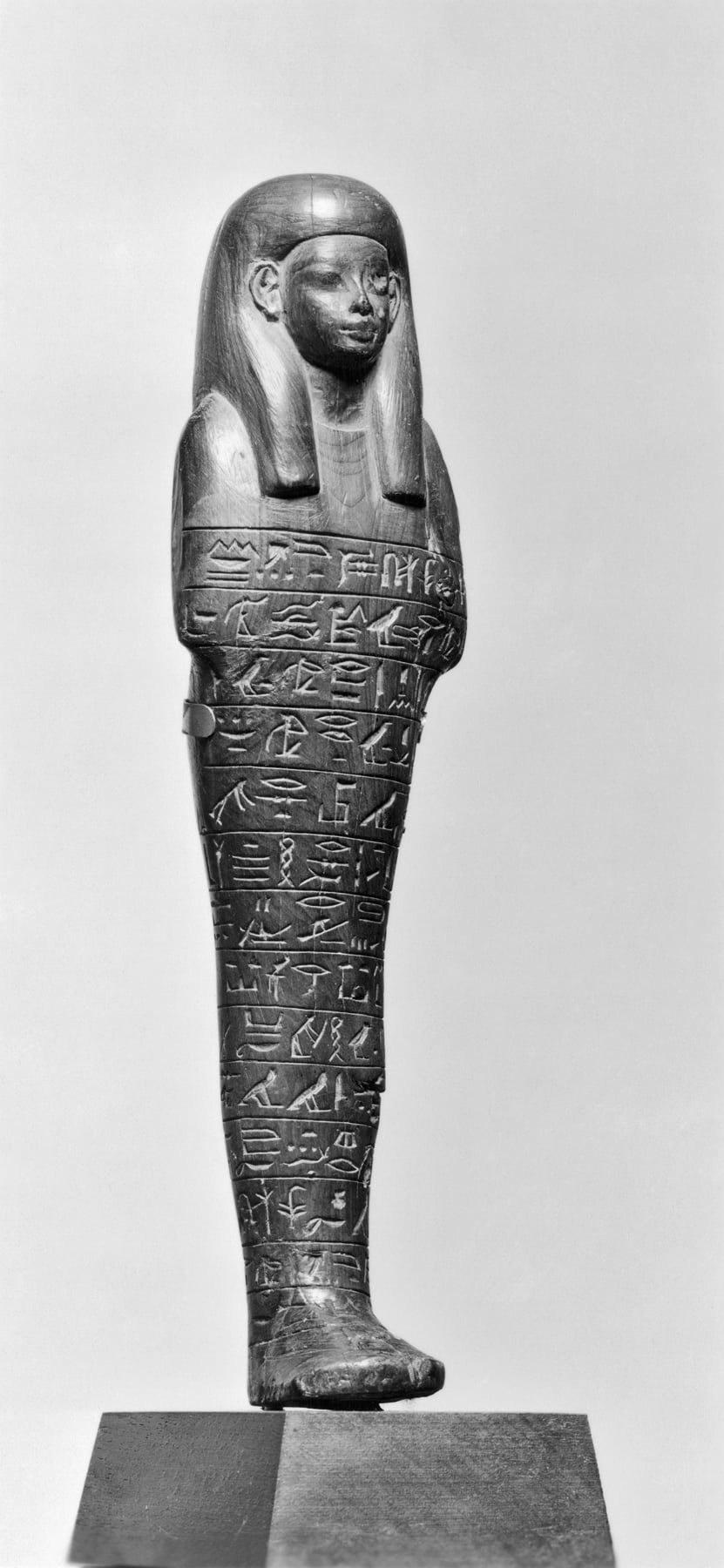
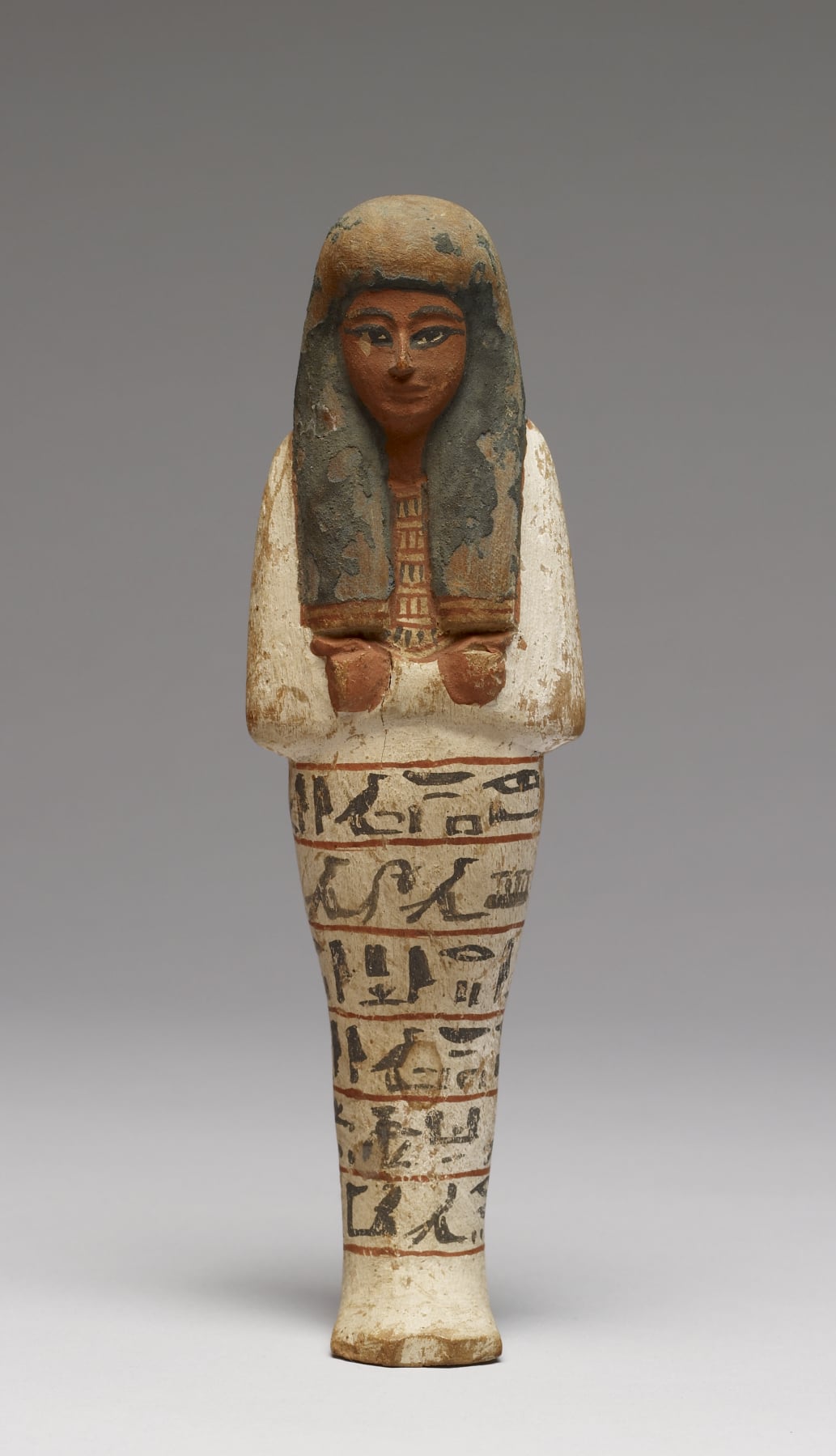
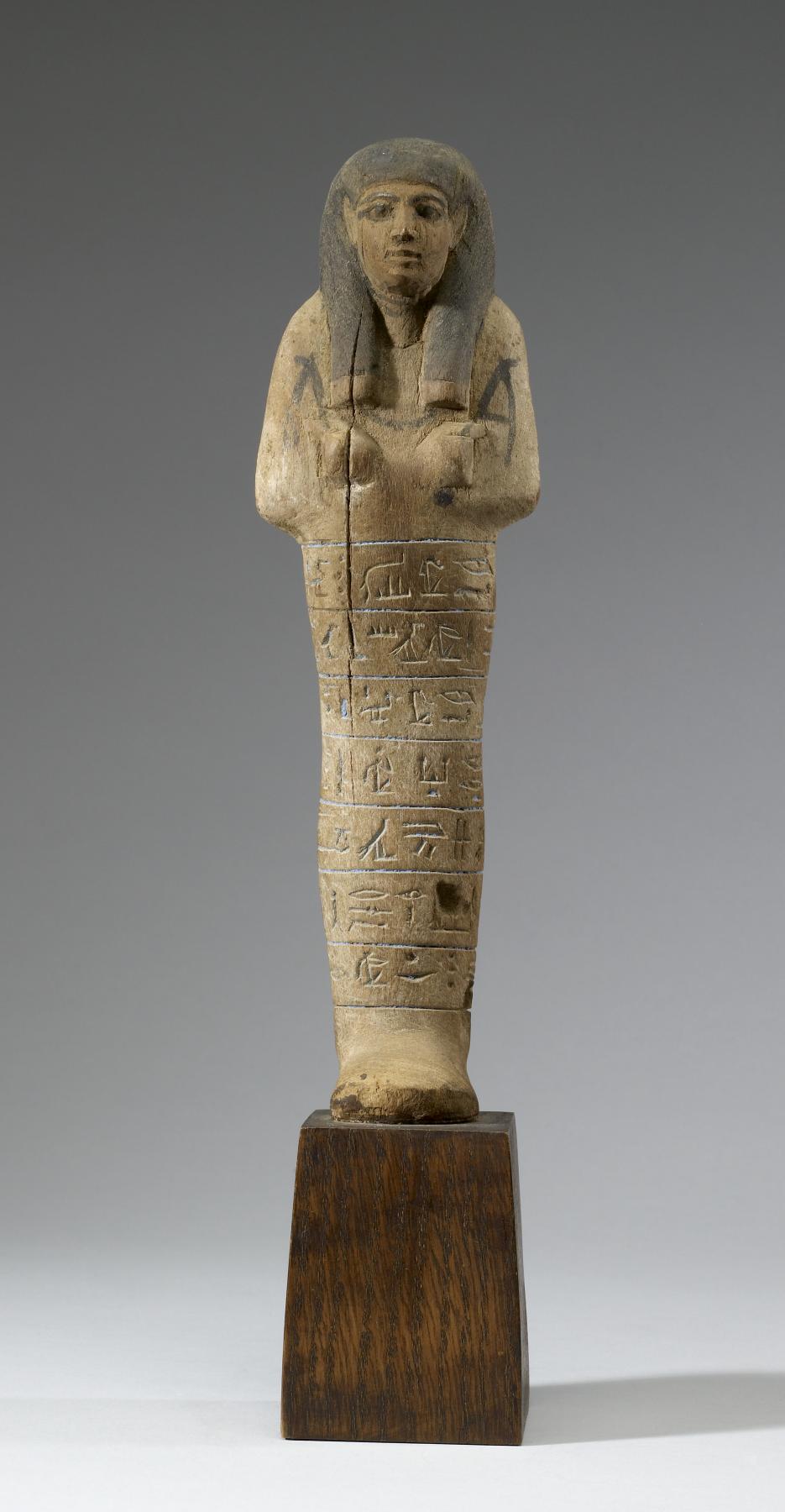
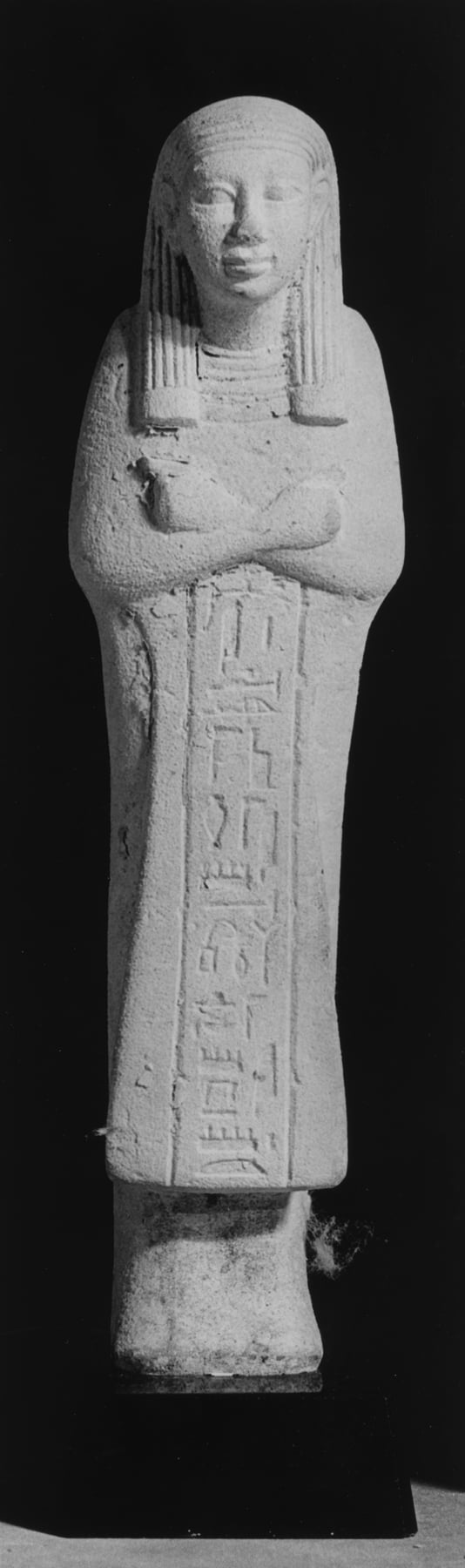
<p>This figure has long hair painted black. The eyes are also black. In the right hand is a hoe, and in the left is a mattock. Behind each shoulder is a sack. The inscription claims the piece is made for "the scribe, Nwfy." Then follows the regular ushabti formula.</p><p>For the latest information about this object, <cite><a href='https://purl.thewalters.org/art/22.181' rel='external'>Ushabti</a></cite>, visit the Online Collection of the Walters Art Museum.</p>
AI image analysis GPT-5.4-nano
Machine-generated from the object's image on Jul 2026. Not curatorial; treat deities, names, and signs below as the model's best reading, not authority.
A standing Egyptian ushabti/answer-statue with painted black/red details, shown front-facing with hands held over its belly and a hieroglyphic columned inscription on the torso.
The artifact is photographed standing upright against a dark background. It has a mummiform body with a wig/head covering and a stylized face. The figure’s hands are brought together or held forward at the lower chest/belly region. Two legs are indicated with a minimal profile and a belt or sash is suggested around the waist. Across the midsection down to the legs is a dense arrangement of incised hieroglyphs/short signs in multiple horizontal registers. Some areas show traces of black paint and red paint, most visible along facial/eyeline areas and in parts of the inscription and clothing-like areas. No Greek, Coptic, or Arabic script is visible. No clearly legible royal cartouche is apparent from the image resolution; the inscriptions appear general and not confidently attributable to a specific king.
Inscriptions (1)
English description
Connections
Cross-references (2)
- Walters-AccNum 22.181 tier-2
- Walters-id 158 tier-2
Similar inscriptions · by content embedding
About this record's data
- From the source institution — accession, description, dimensions, and dating are as catalogued by Walters Art Museum (Egyptian).
- AI-inferred — the image-analysis panel (deities, names, signs) is machine-generated and may be wrong.
- Approximate location — most map points are plotted at the site centroid, not the exact findspot.
- Inferred links — cross-references marked with a match method other than explicit-source-field were matched by us, not stated by the source.