WALTERS-EG
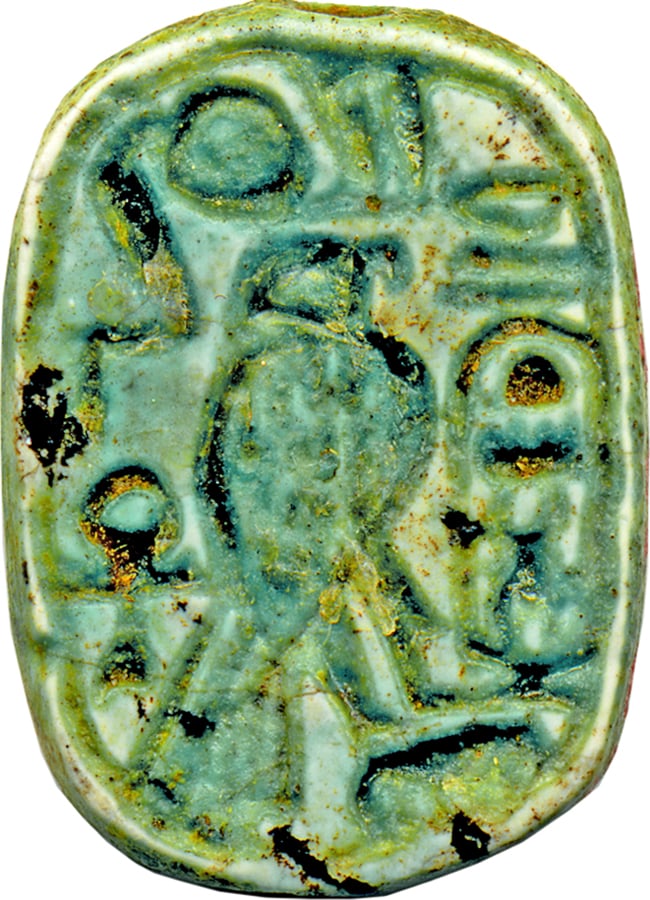
<p>This symmetrical oval plaque has icons and inscriptions on both sides. The front depicts an icon and image of King Thutmosis IV (1397-1388 BCE); on the back is a representation of a vulture combined with the royal name. Both sides are executed in sunk relief with deeply incised outlines and finer lines on the inner structures. The sides are smoothed and the layout is balanced. The piece is carefully made. The plaque functioned as an individualized amulet, and was originally mounted and threaded. The amulet should secure the divinity and royal authority for the king, as well as divine protection; it should provide a private owner with his royal patronage and divine protection. The figure of the vulture above a cartouche is less common on scarabs; more often are examples displaying the vulture with outstretched wings at the side of the royal name. Oval plaques of this type are typical for the 18th Dynasty, especially for the period of the reign of Thutmosis III (1479-1425 BCE)-Amenophis III (1388-1351/1350 BCE).</p><p>For the latest information about this object, <cite><a href='https://purl.thewalters.org/art/42.28' rel='external'>Plaque with the Throne Name of Thutmosis IV</a></cite>, visit the Online Collection of the Walters Art Museum.</p>
A machine reading of the photograph made Jul 2026: deities, names, signs and a description as the model saw them. Not curatorial; treat it as the model's best reading, not authority.
Spotted an error, a mis-mapped findspot, or have a suggestion? We read every note.