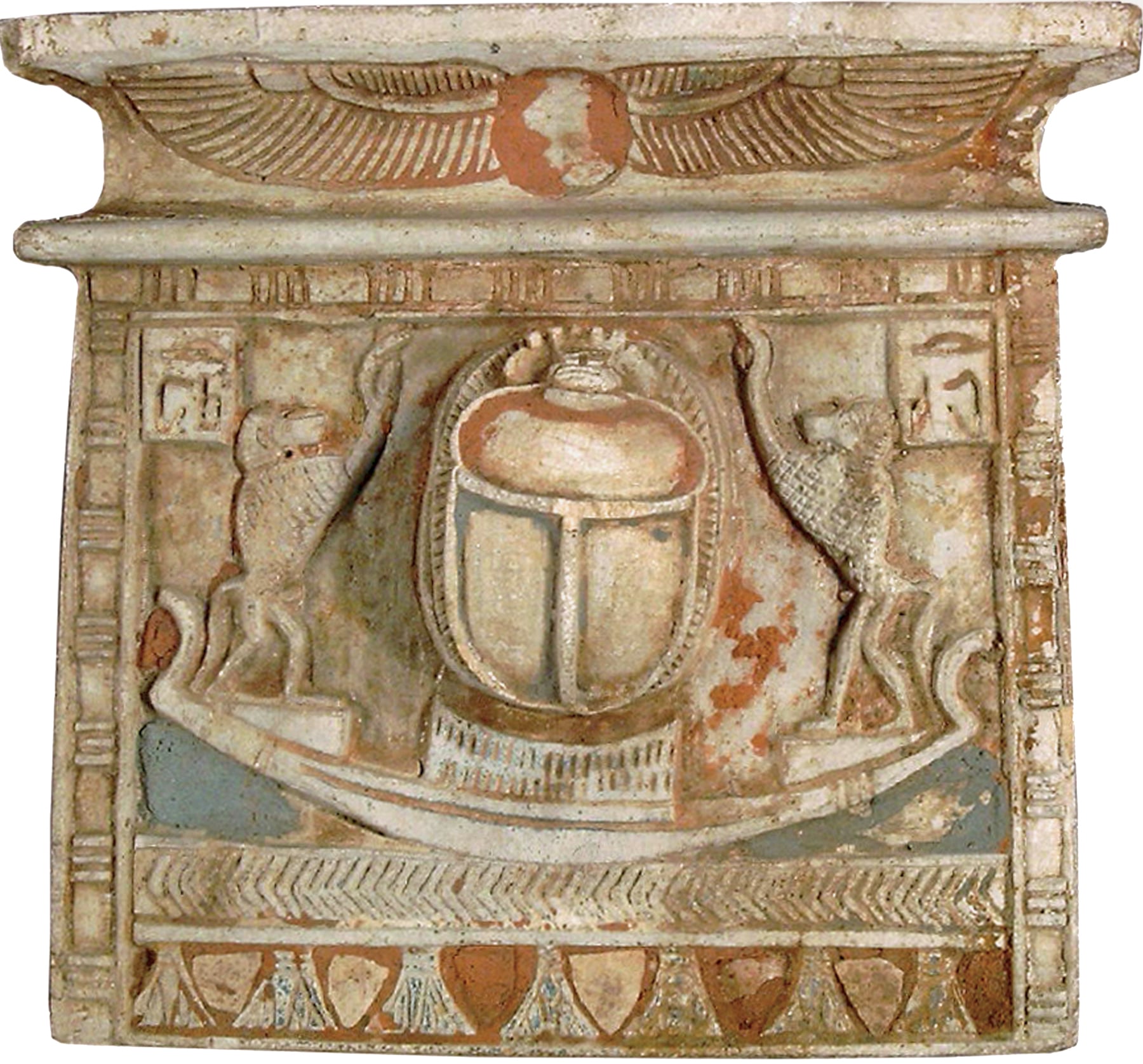
Heart Scarab with Deceased Adoring Osiris
Description
<p>This steatite pendant is suspended by a perforated tang. Stone inlays are set in black paste. On the front is a beetle with outstretched legs in high relief. On the flat reverse tiny inlays filled the recessed figures. Shown within a square frame is a male figure in the elaborate dress of the Ramesid period adoring Osiris. The hieroglyphs at top identify the figures as "Osiris" and "The Osirian Mose."</p><p>For the latest information about this object, <cite><a href='https://purl.thewalters.org/art/42.83' rel='external'>Heart Scarab with Deceased Adoring Osiris</a></cite>, visit the Online Collection of the Walters Art Museum.</p>
AI image analysis GPT-5.4-nano
Machine-generated from the object's image on Jul 2026. Not curatorial; treat deities, names, and signs below as the model's best reading, not authority.
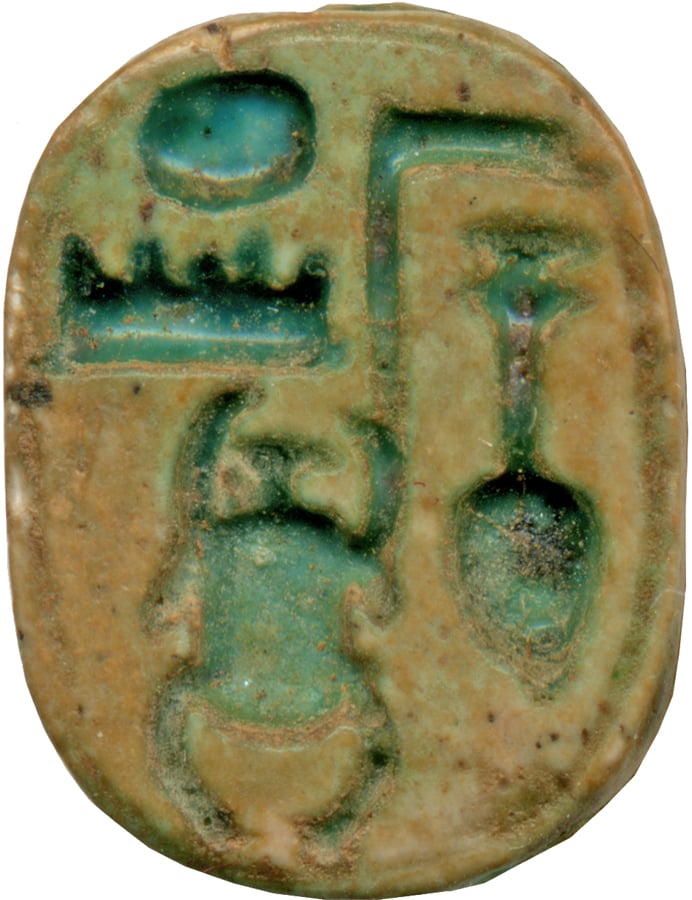
Close-up of an Egyptian heart scarab showing a recessed/inscribed central oval cartouche-like field and surrounding decorative grooves.
The object is photographed in a frontal view, appearing heart-scarab shaped with a central recessed oval area containing worn traces of decoration or text. Surrounding the central field are molded grooves and raised bands forming a symmetrical design around a vertical element. The surface is heavily worn and mottled, with visible reddish-brown and tan discoloration consistent with remaining material or old pigment; the underside is not visible in this image. No clear cartouches or legible hieroglyphic signs can be confidently identified from the worn central area. The overall style is consistent with a heart scarab bearing funerary religious iconography, but the specific phrase and deity reference cannot be verified visually beyond the general heart-scarab form.
Inscriptions (1)
English description
Connections
Cross-references (2)
- Walters-AccNum 42.83 tier-2
- Walters-id 24205 tier-2
Similar inscriptions · by content embedding
About this record's data
- From the source institution — accession, description, dimensions, and dating are as catalogued by Walters Art Museum (Egyptian).
- AI-inferred — the image-analysis panel (deities, names, signs) is machine-generated and may be wrong.
- Approximate location — most map points are plotted at the site centroid, not the exact findspot.
- Inferred links — cross-references marked with a match method other than explicit-source-field were matched by us, not stated by the source.