Source of record: Walters Art Museum (Egyptian) — catalogued by the holding institution. View the original record →
Description
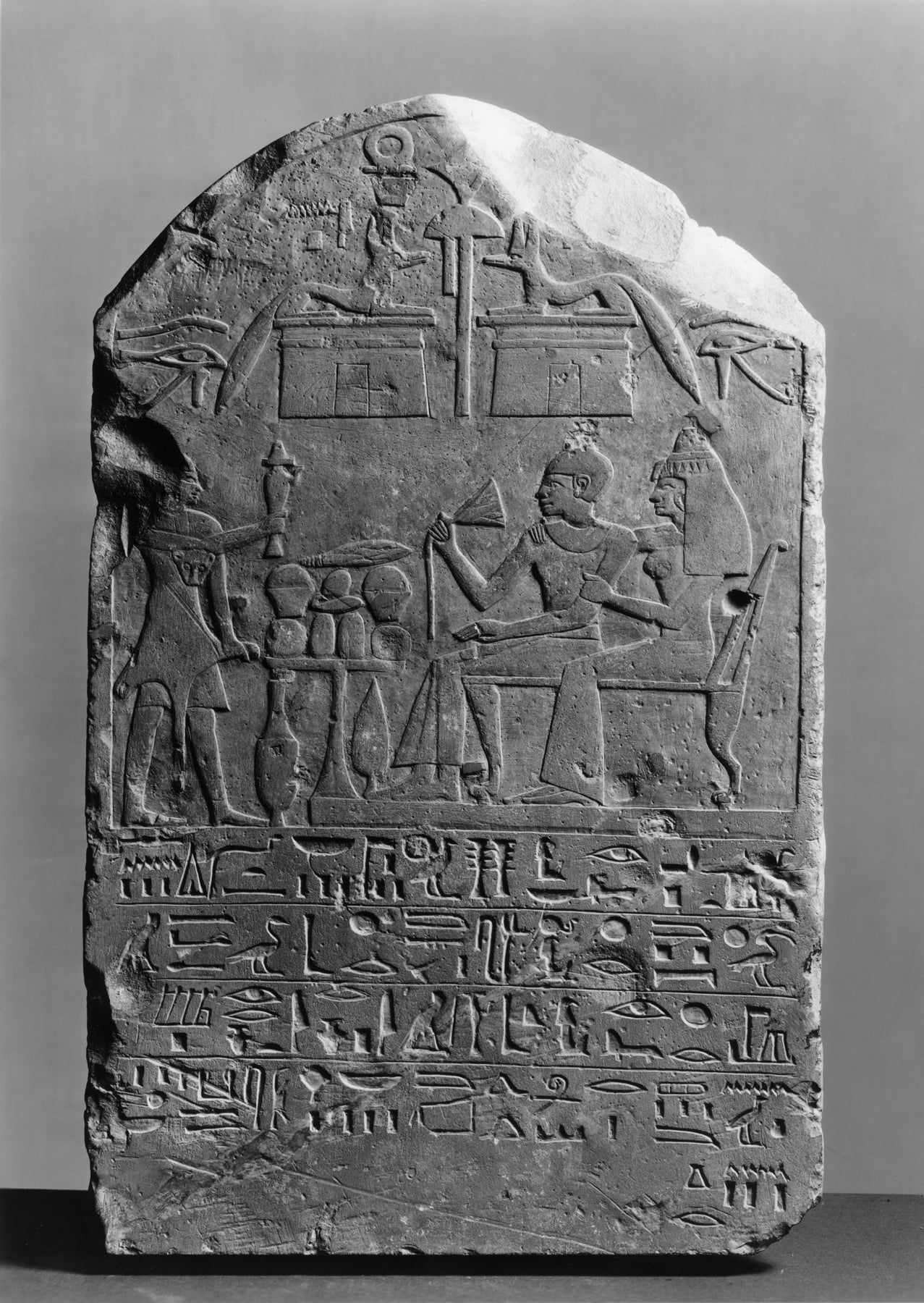
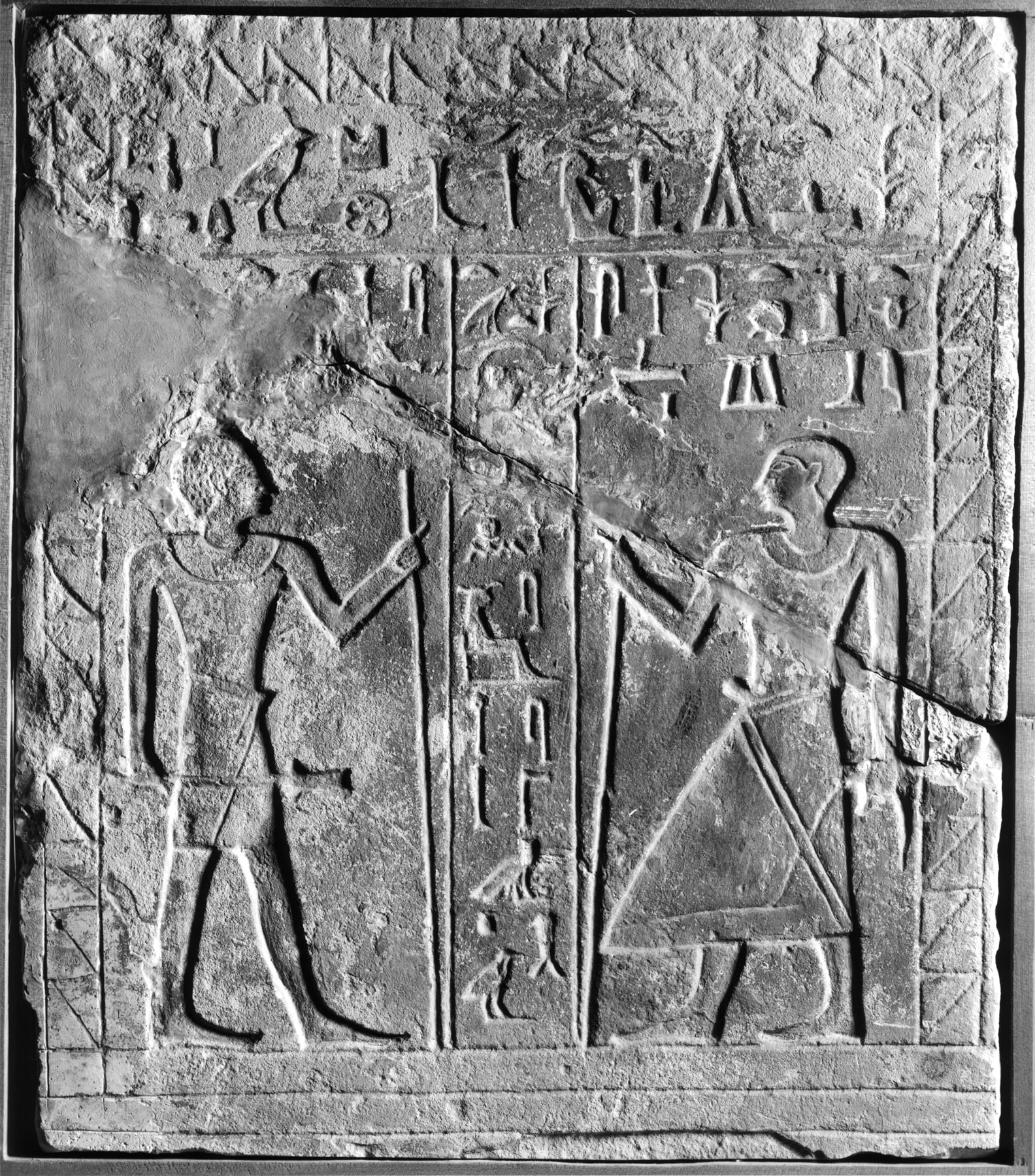
<p>Meri-neith Wah-ib-Re is represented twice on this round-topped funerary monument commemorating him and his parents. Beneath a winged sun disk, the official is shown worshipping the lord of the underworld, Osiris, and his wife, Isis. In front of Meri-neith's upraised hands is a table heaped with food and floral offerings. At the bottom, he makes a floral offering to his father, Psamtik, and mother, Amenirdis. The arrangement of this couple almost mirrors that of the divine couple above them. Between the two scenes are three lines of hieroglyphic text that record a request for funerary offerings on behalf of the three individuals.</p><p>For the latest information about this object, <cite><a href='https://purl.thewalters.org/art/22.123' rel='external'>Funerary Stele of Meri-neith Wah-ib-Re</a></cite>, visit the Online Collection of the Walters Art Museum.</p>
AI image analysis GPT-5.4-nano
A machine reading of the photograph made Jul 2026: deities, names, signs and a description as the model saw them. Not curatorial; treat it as the model's best reading, not authority.
Inscriptions (4)
Inscription #1
English description
[At the top] The lord of the heaven, the (god) of Edfu (Behdet).
Inscription #2
English description
[First register] Osiris, the lord of the necropolis. Isis, the great, the God's mother. The revered before Osiris, Meri-neith Wah-ib-Re, son of Psametik.
Inscription #3
English description
[Lower register] Psametik, son of Tefnakhte. The Lady Amenerdais. His son, Meri-neith Wah-ib-Re, the blessed.
Inscription #4
English description
[MIddle register] An offering which the king gives (to) Ptah-Soker-Osiris, the great god, the lord of the necropolis, that he may give funerary offerings of bread, beer, oxen, fowl, all good pure things, incense, cool water (to) the Osiris, Meri-neith Wah-ib-Re, son of Psametik, the blessed, son of Tefnakhte, the blessed, born of Amenerdais.