Ushabti
Description
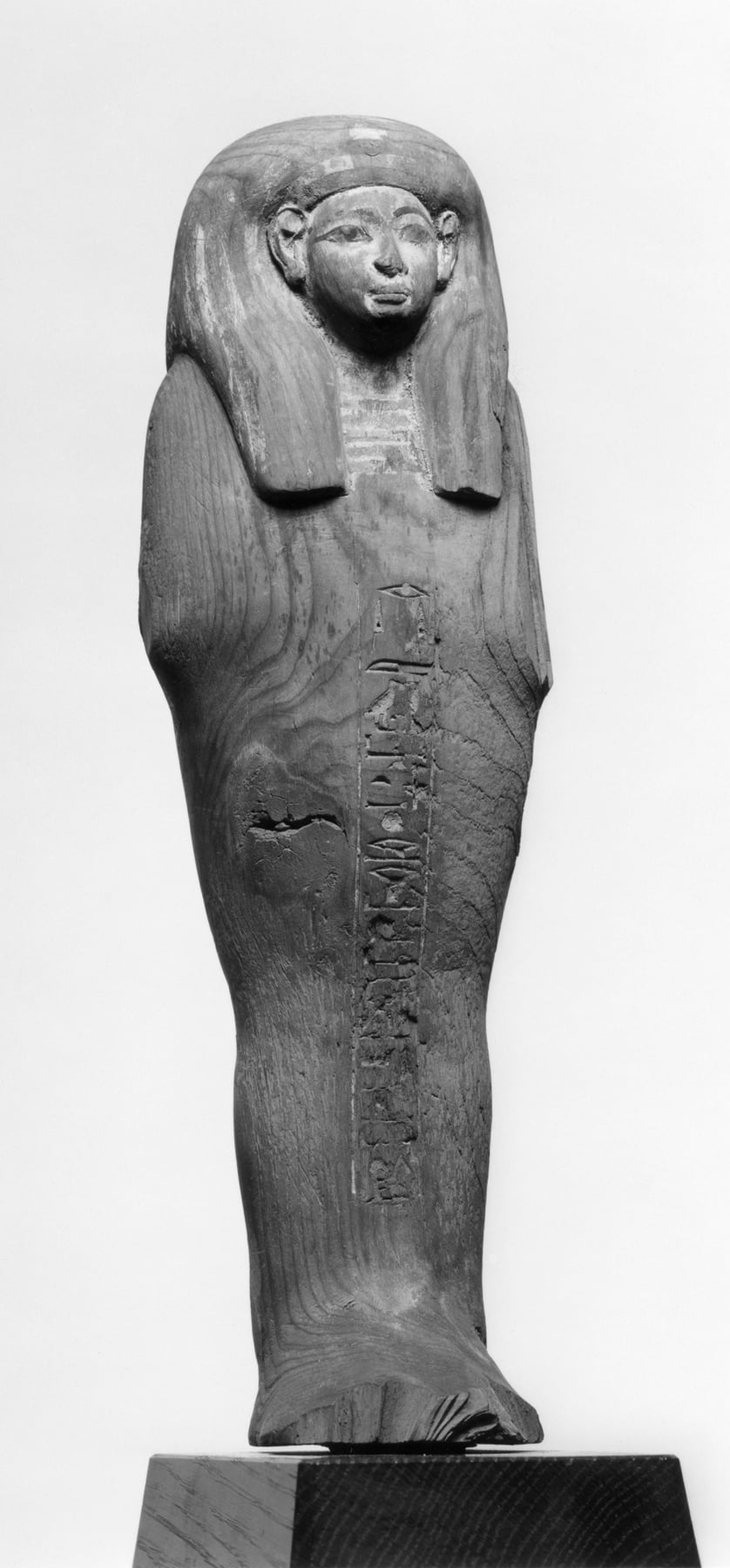
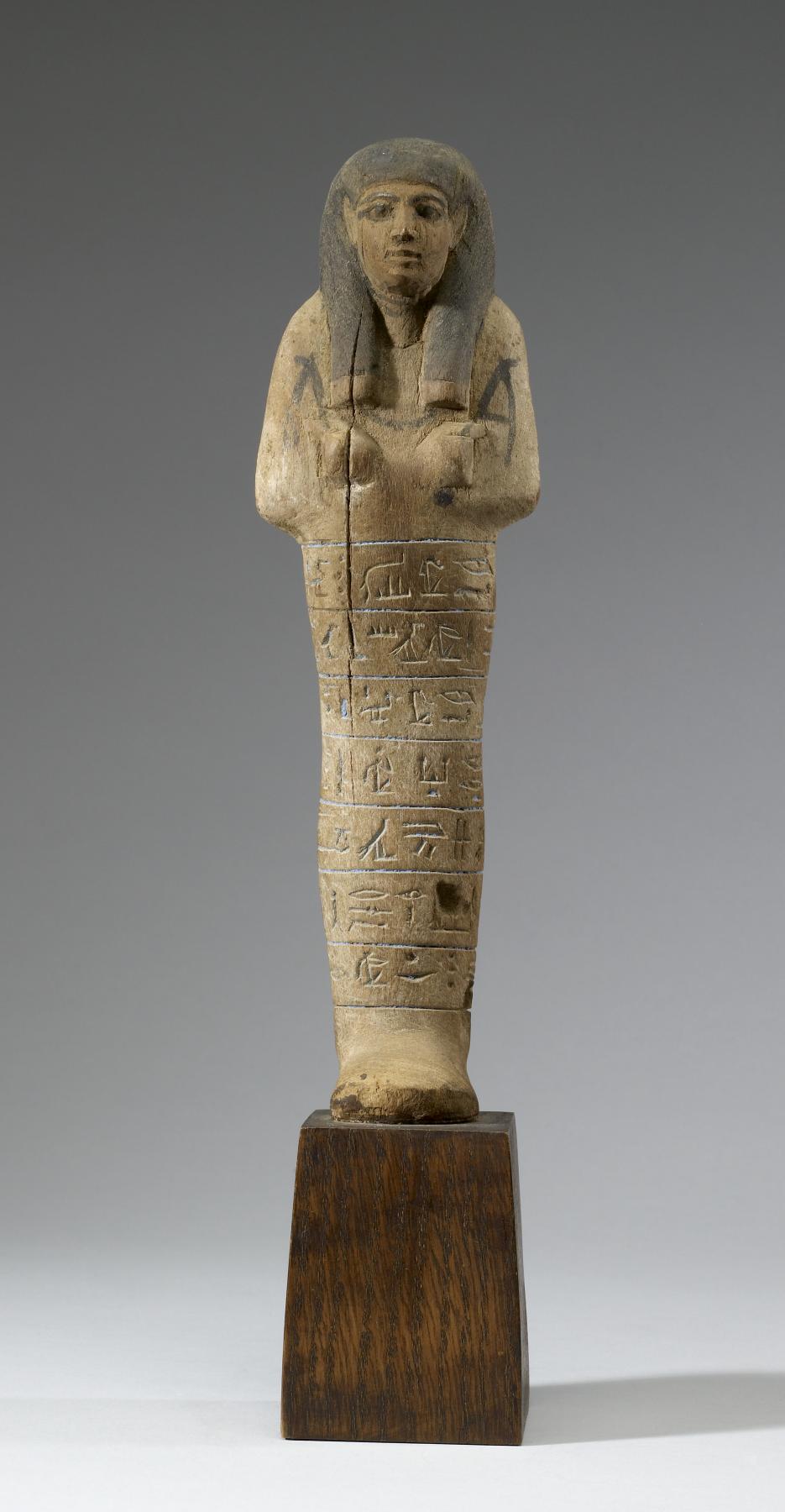
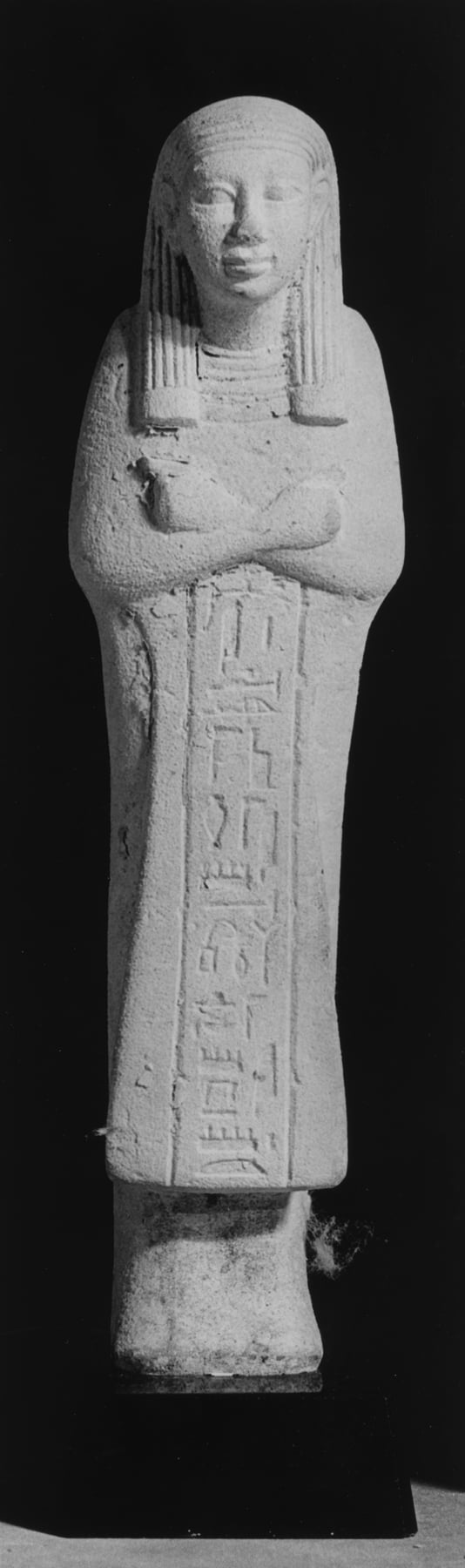
<p>This mummiform figure has folded arms. In the right is a mattock with a cord to a sack behind the figure's left shoulder. In the left hand is a hoe. The figure's eyes are painted, and there is a painted inscription on the front.</p><p>For the latest information about this object, <cite><a href='https://purl.thewalters.org/art/22.317' rel='external'>Ushabti</a></cite>, visit the Online Collection of the Walters Art Museum.</p>
AI image analysis GPT-5.4-nano
Machine-generated from the object's image on Jul 2026. Not curatorial; treat deities, names, and signs below as the model's best reading, not authority.
A small, human-shaped ancient Egyptian funerary figure standing upright with wig and crossed arms, painted in black over a light surface.
The object appears to be a pale limestone or stone figure with a simplified face, straight features, and a stylized wig/beard arrangement at the back of the head. The arms are held crossed at the forearms over the torso. The front body bears rows of painted lines and rectangular/blocky elements that resemble carved/painted schematized decoration typical of ushabti figures (e.g., a grid-like layout on the torso). The head, facial features, and incised/outlined areas show black paint, while the body remains mostly light with darker painted bands and markings. No clear cartouches or readable royal names are visible in the image, and the painted inscriptions are too unclear to transcribe reliably. No Greek/Coptic/Arabic text is present. The figure is shown in studio lighting against a dark background, suggesting a photographed museum object.
Inscriptions (2)
English description
English description
Cross-references (2)
- Walters-AccNum 22.317 tier-2
- Walters-id 221 tier-2
Similar inscriptions · by content embedding
About this record's data
- From the source institution — accession, description, dimensions, and dating are as catalogued by Walters Art Museum (Egyptian).
- AI-inferred — the image-analysis panel (deities, names, signs) is machine-generated and may be wrong.
- Approximate location — most map points are plotted at the site centroid, not the exact findspot.
- Inferred links — cross-references marked with a match method other than explicit-source-field were matched by us, not stated by the source.