WALTERS-EG
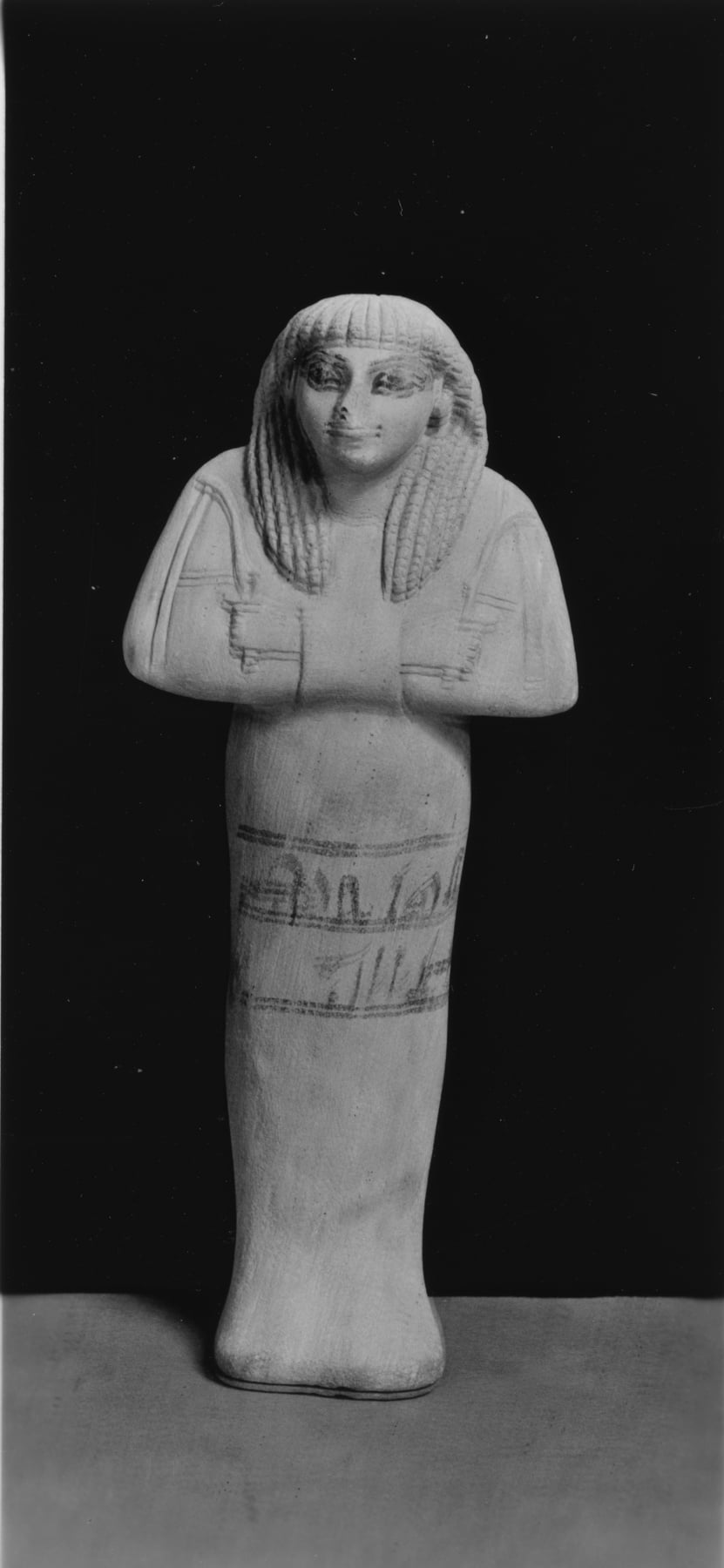
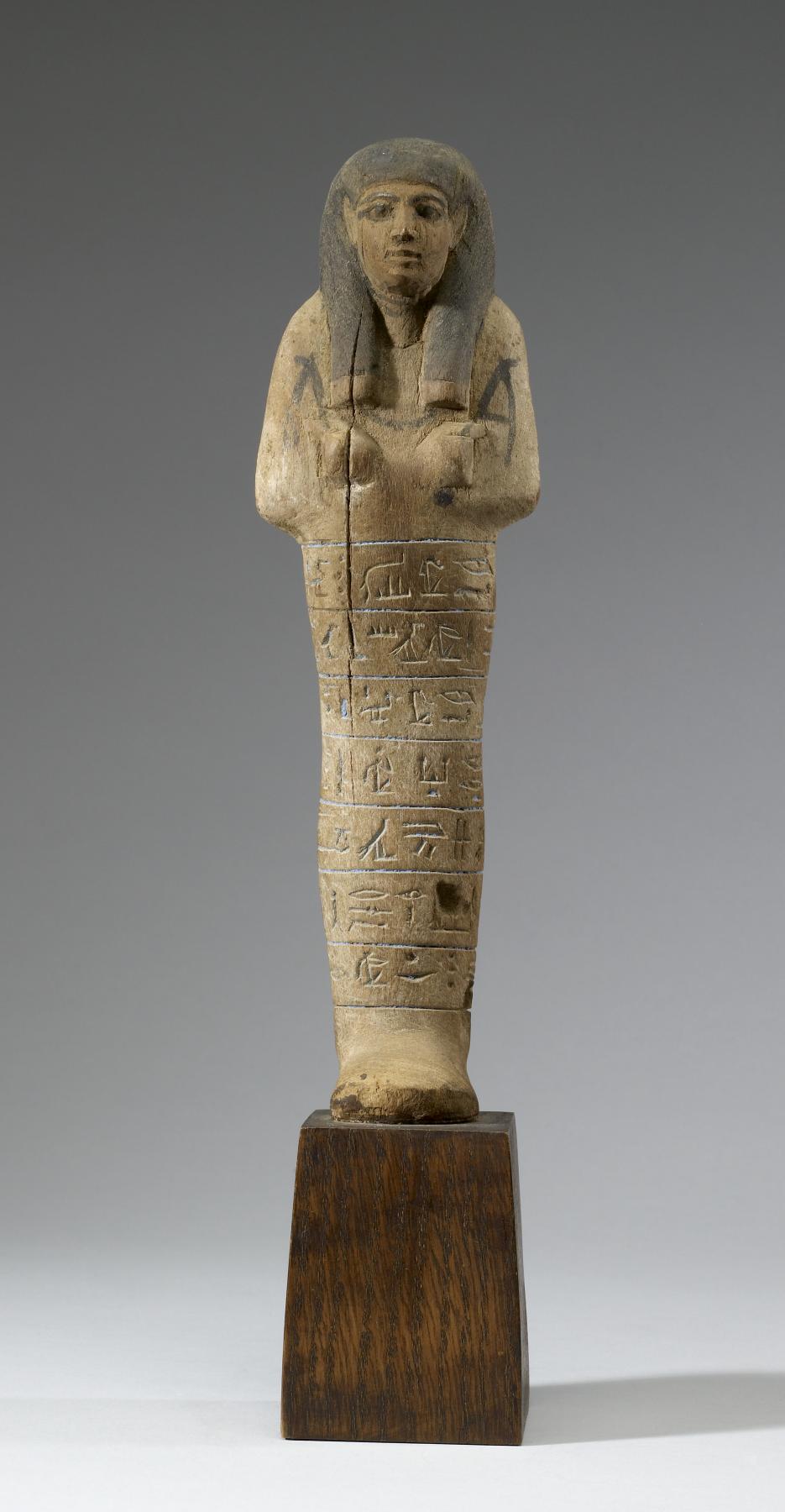
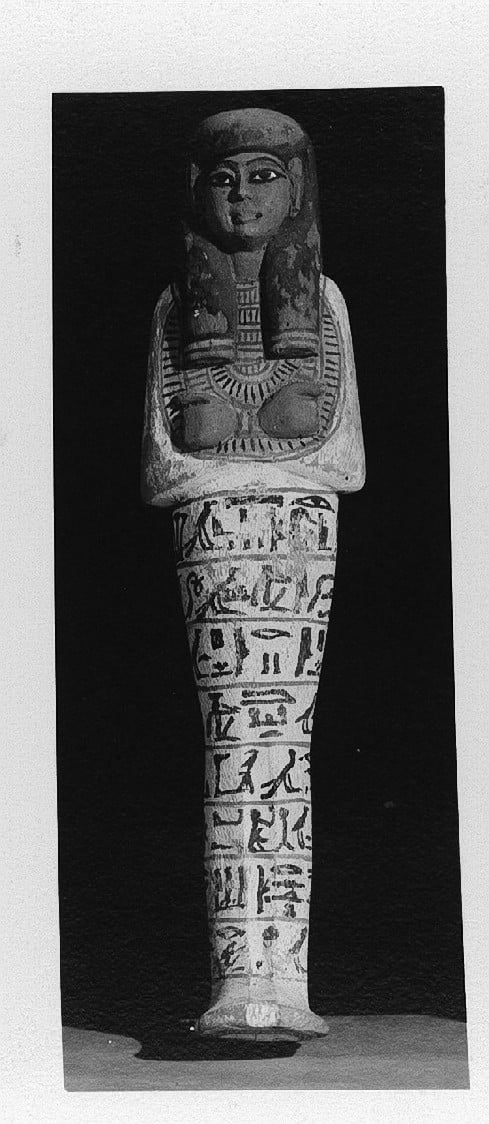
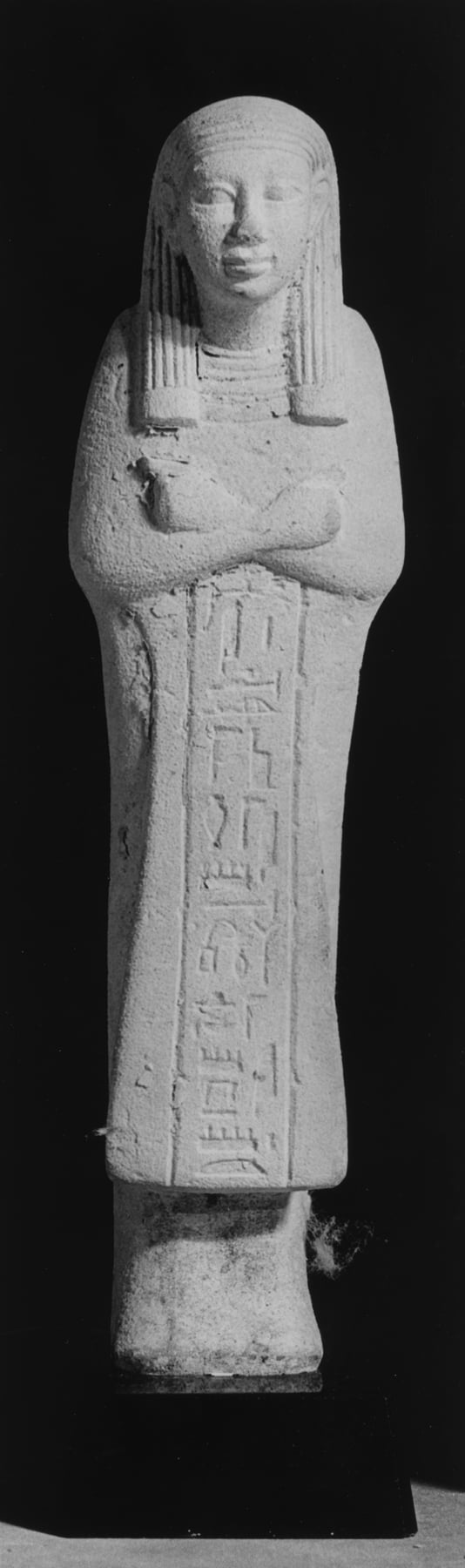
<p>This piece is carved in the round and painted. The mummiform figure has long hair that is striped blue and white. It has a white face, and the pupils, lashes, and eyebrows are neck. It wears painted necklaces. The arms below the elbows are not indicated.Ken-Amun was a high official and overseer of the army recruits. The text on the body of his unusually large ushabti tells us that it was "made by favor of the king."</p><p>For the latest information about this object, <cite><a href='https://purl.thewalters.org/art/22.194' rel='external'>Ushabti of Ken-Amun</a></cite>, visit the Online Collection of the Walters Art Museum.</p>
Linked as the same object. Each record below describes this same artifact or text from a different angle.
Machine-generated from the object's image on Jul 2026. Not curatorial; treat deities, names, and signs below as the model's best reading, not authority.
A painted wooden ushabti figure in mummiform pose, with a wig/headdress and a vertical column of incised hieroglyphs across the front.
The image shows a standing, mummiform ushabti with arms crossed over the chest area and a stylized tripartite wig/head covering. The surface is worn but retains remnants of painted decoration in light and dark areas, consistent with a multi-color painted figure. The central portion includes an incised vertical hieroglyphic inscription; individual signs are visible but not clear enough at this resolution to reliably transcribe. No clearly legible Greek, Coptic, or Arabic text is present. A base or stand is visible at the bottom, but it is not part of the artifact surface.
Spotted an error, a mis-mapped findspot, or have a suggestion? We read every note.