BKM
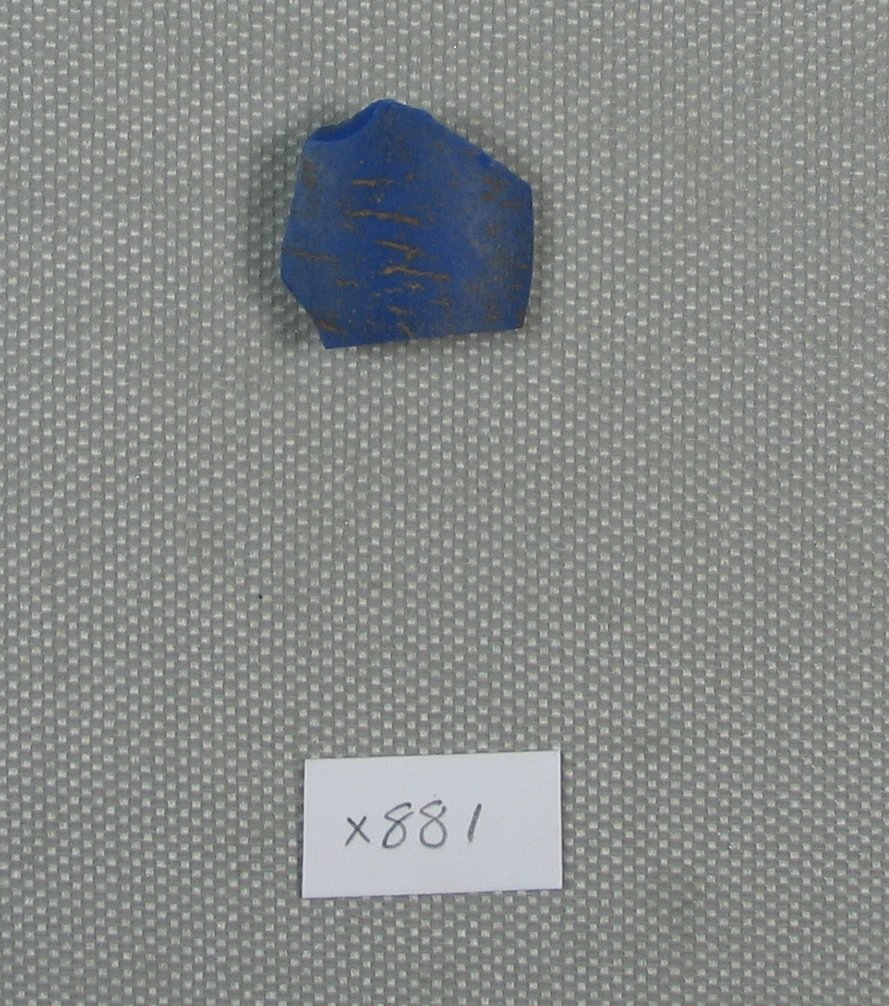
Fragment
Handwritten label: "X881"
The short-lived capital, from the EES grid to museum collections · 8,766 objects.
Pharaoh Akhenaten built a new capital at Amarna in c. 1346 BCE, abandoned it after his death, and the site was buried for three millennia. The Egypt Exploration Society recorded every find on the Petrie grid; those excavation records have no photographs here. Museum collections (the Met, Brooklyn, the British Museum) hold the painted fragments, talatat, and household objects from the same city — they are the pictures for this theme.
Photographs are museum objects found at Amarna. Titles such as ?arrow head are the EES excavators' own identifications; a leading question mark is their mark of uncertainty.
Handwritten label: "X881"
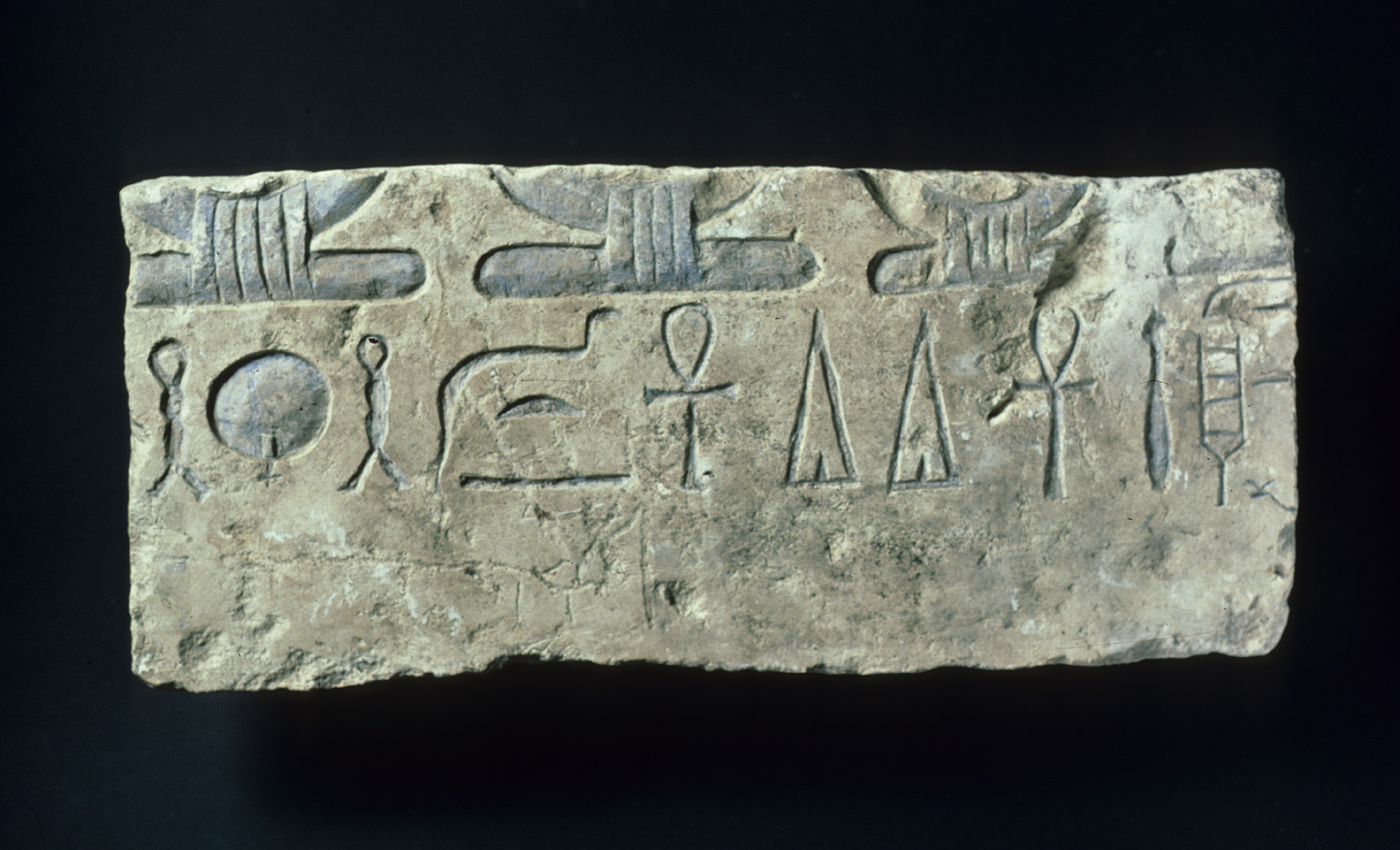
Incised hieroglyphs in a horizontal band including cartouche-like bordered units; exact transcription unclear due to erosion.

Note: Larger fragment: remains of two lines of black-painted hieratic text. Smaller fragment: remains of one line of bl…
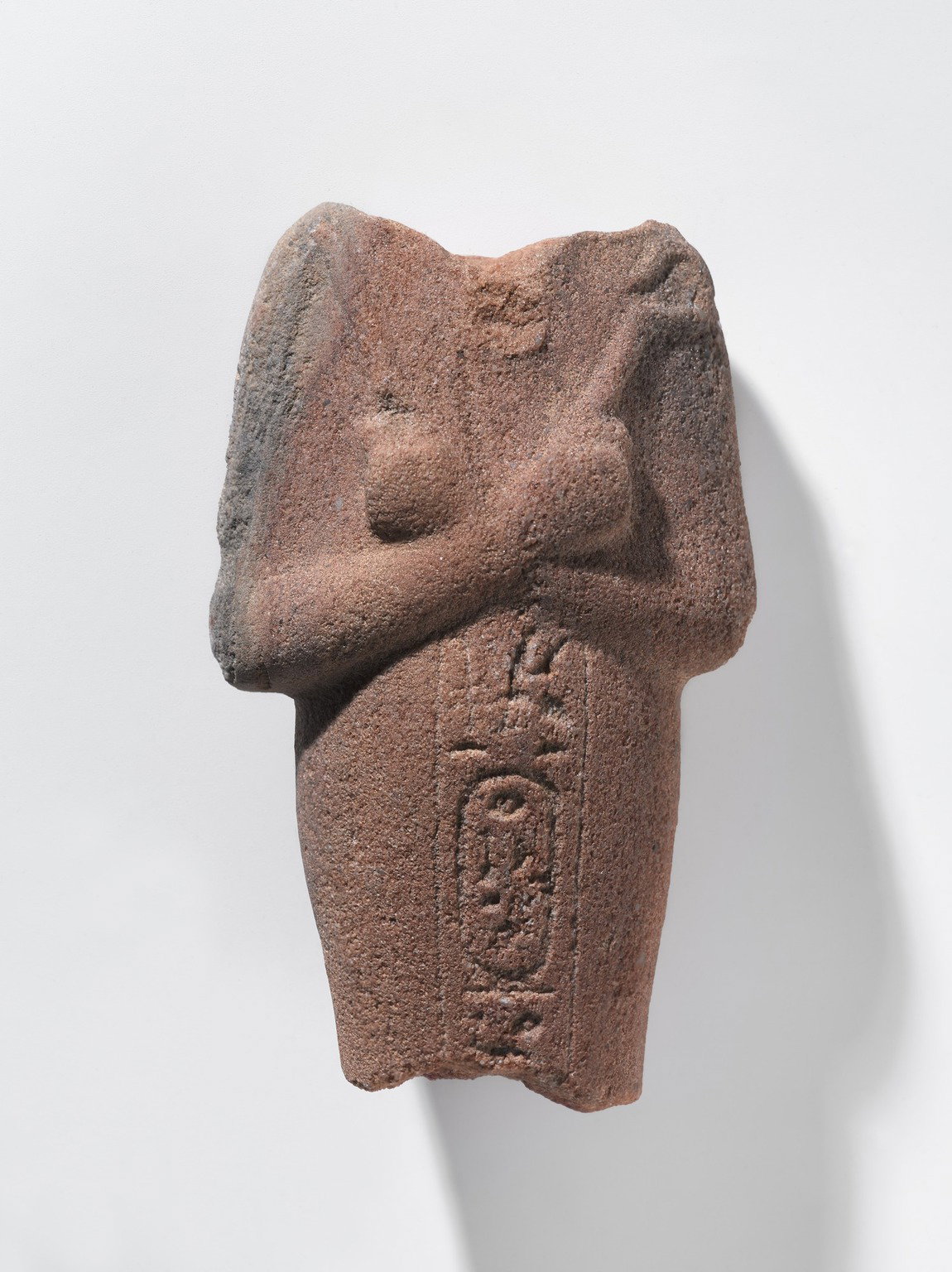
A vertical column of incised hieroglyph-like signs is present, but individual signs/wording are not confidently legible…
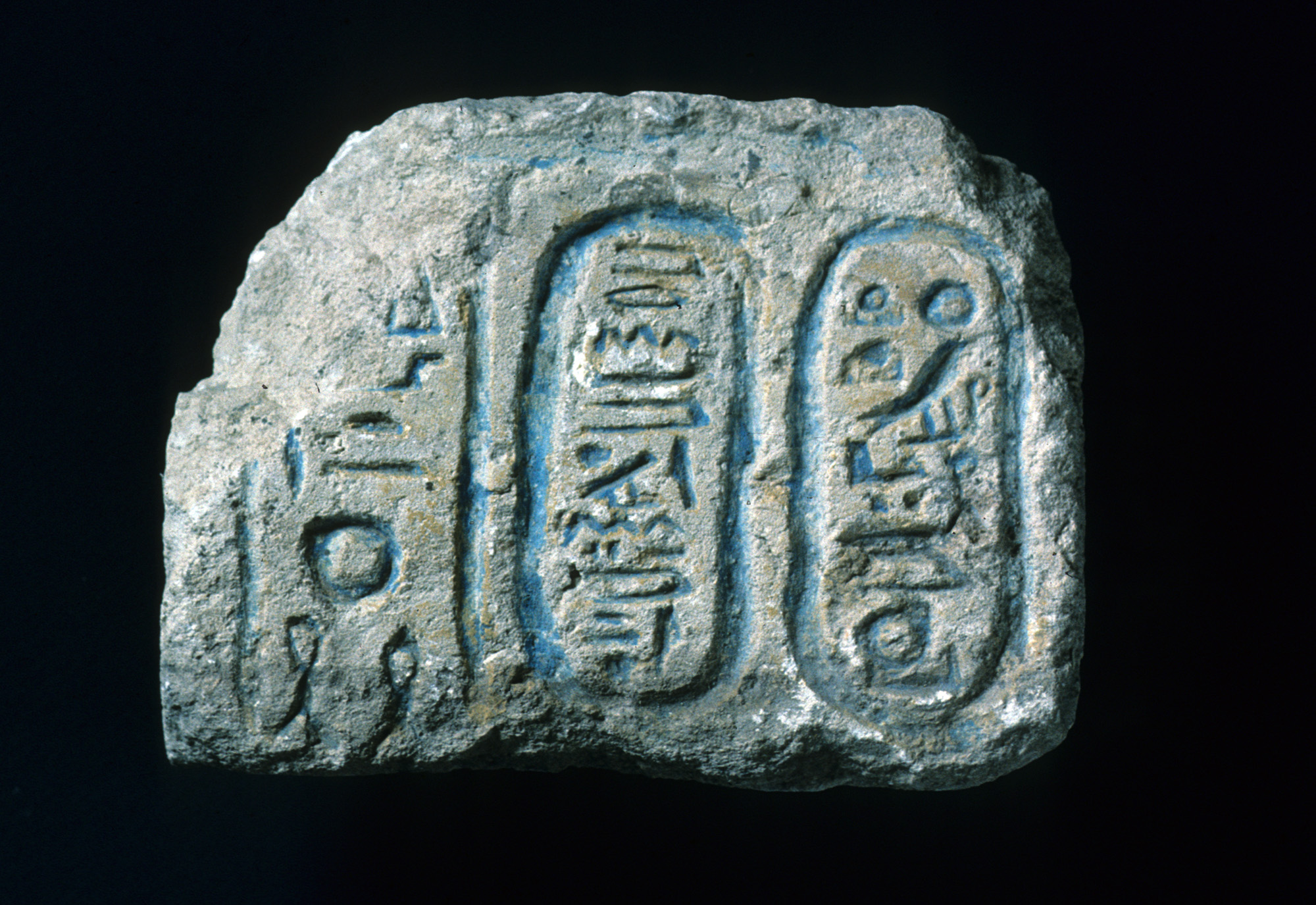
Cartouche(s) with internal hieroglyphs; exact royal titulary text unclear/undecipherable from image.
CONSULT PRIMARY RECORD
?cast — cartouche of Nefertiti incised on plaster
Year 5 of the reign, 4th month of the Peret season, [day] 13. [Long live my father "Re-Harachte, who rejoices in the horizon in his name sunlight, which is in the sun" (=Aton)], the great living Aton…
rnp,t-zp 5 ꜣbd 4 pr,t [sw] ⸢13⸣ 〈§〉 ꜥnḫ nṯr-nfr ⸢hru̯⸣-[ḥr-Mꜣꜥ,t] nb-p,t nb-[tꜣ] [Jtn] [ꜥnḫ] [wr] [sḥḏ-Tꜣ.du]…
Fragment of a Tile
cartouche of Akhenaten
amphora (?)
Spotted an error, a mis-mapped findspot, or have a suggestion? We read every note.