stelae
The same text in other collections
Linked as the same object. Each record below describes this same artifact or text from a different angle.
- Fitzwilliam E.GA.4700.1943 PNM text
AI image analysis GPT-5.4-nano
Machine-generated from the object's image on Jul 2026. Not curatorial; treat deities, names, and signs below as the model's best reading, not authority.
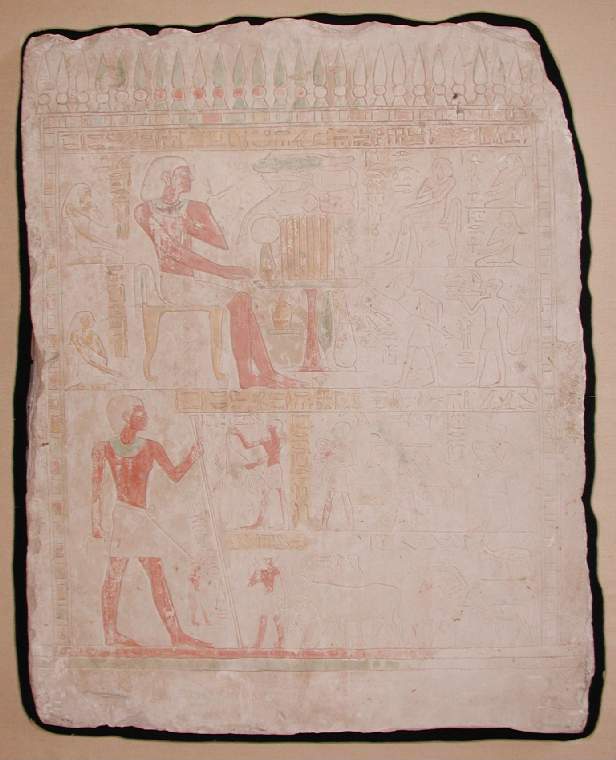
A painted limestone stela shows several standing figures and a central god-like figure wearing a distinctive headdress, surrounded by columns of hieroglyphs and iconographic scenes.
The image depicts a tall, rounded-top rectangular stela made of light-colored stone, heavily worn/chipped at the lower and right edges. The surface is painted in red, ochre, green, and black, with multiple registers of figures. A central, larger standing figure dominates the upper half: it wears a rounded, multi-element headdress including a prominent disk-like element and a striped collar, and extends one arm forward while the other is held closer to the body; behind/near the figure are vertical and horizontal hieroglyphic signs in dark ink. To the left and right are smaller standing figures with red-orange skin tones and pale garments, shown with raised hands and holding/gesturing toward a seated or smaller figure at the left side. In the lower register, additional standing figures flank a central group; there is also a small seated or kneeling form near the center. Along the bottom and across the midsection, clusters of hieroglyphs are visible but many individual signs are too worn to identify confidently. No clearly readable cartouche or full royal name is discernible from the provided resolution. No Greek/Coptic/Arabic text is visible.
Inscriptions (5)
Transcription
Gourna Luxor 6.5.21Cross-references (1)
- PNM-Object pnm:83892224 tier-2 (inventory-match)
Similar inscriptions · by content embedding
About this record's data
- From the source institution — accession, description, dimensions, and dating are as catalogued by Fitzwilliam Museum — Department of Antiquities (Egyptian).
- AI-inferred — the image-analysis panel (deities, names, signs) is machine-generated and may be wrong.
- Approximate location — most map points are plotted at the site centroid, not the exact findspot.
- Inferred links — cross-references marked with a match method other than explicit-source-field were matched by us, not stated by the source.